











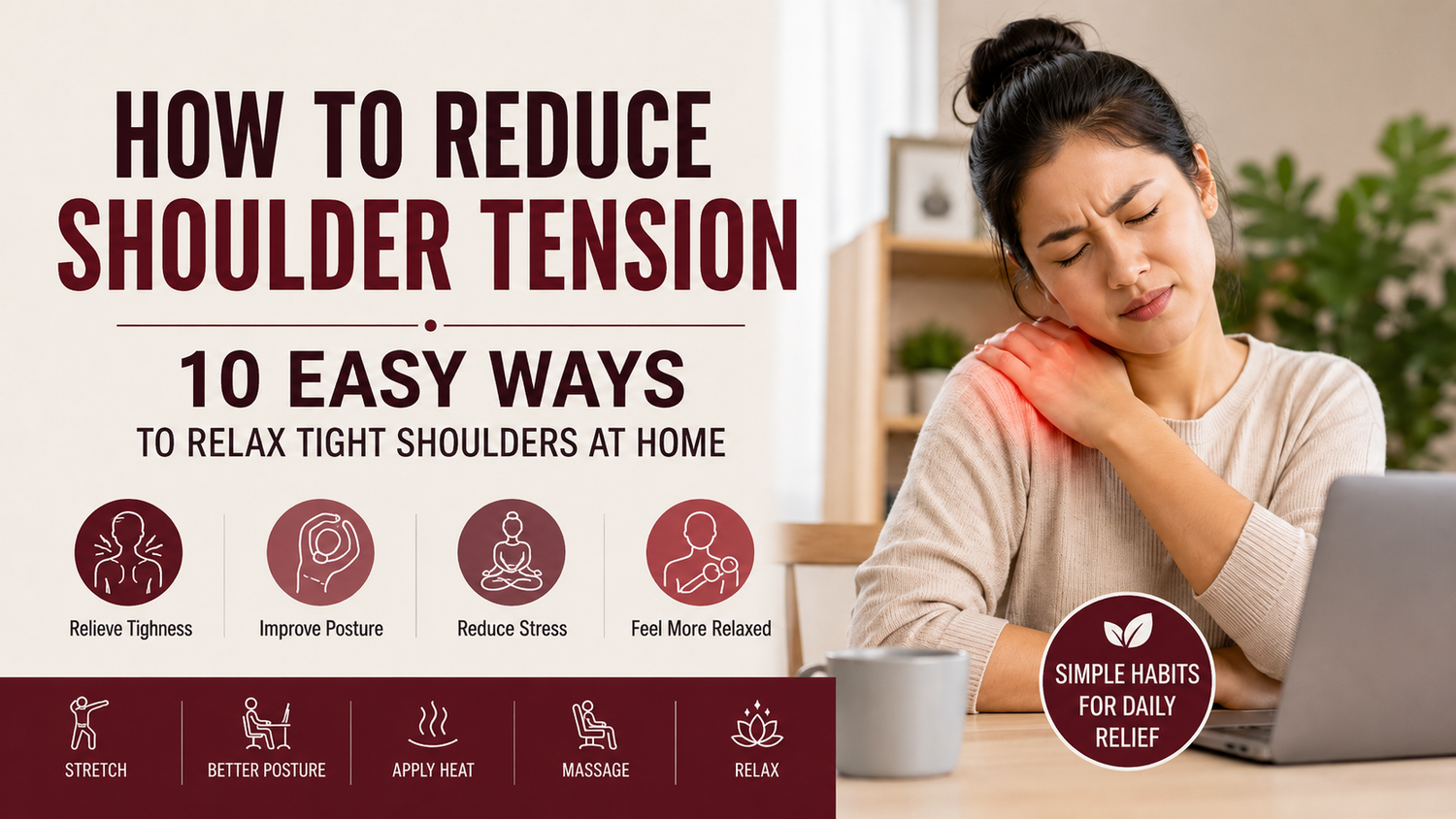
Tight shoulders are common among people who spend long hours working at a desk, using a phone, driving or repeating the same movements throughout the day. Stress, limited movement and poor sitting posture may also make the neck and shoulder area feel stiff, heavy or uncomfortable.
The good news is that mild shoulder tension can often be managed with simple changes to your daily routine. Gentle movement, better posture, rest may help your shoulders feel more comfortable.
Quick Answer: What Is the Best Way to Reduce Shoulder Tension?
To reduce mild shoulder tension, take regular movement breaks, perform gentle shoulder stretches, improve your sitting posture, apply comfortable warmth, manage stress and avoid remaining in one position for too long. Massage may also help the surrounding muscles feel more relaxed.
Stop any activity that causes sharp pain, numbness, weakness or increasing discomfort. Seek advice from a qualified healthcare professional when symptoms are severe, persistent or related to an injury.
What Causes Tight Shoulders?
Shoulder tension does not always have one single cause. It may develop gradually because of everyday habits, working conditions or physical and emotional stress.
Common contributing factors may include:
- Sitting at a computer for long periods
- Looking down at a phone or tablet
- Rounded shoulders or forward-head posture
- Carrying a heavy bag on one side
- Repeating the same arm movements
- Limited physical activity
- Stress and unconscious shoulder tightening
- An unsuitable desk, chair or screen position
- Sleeping in an uncomfortable position
Understanding when the tightness usually appears can help you identify which habits need to change.
10 Ways to Reduce Shoulder Tension at Home
1. Perform Gentle Shoulder Rolls
Shoulder rolls are an easy movement that can be performed while sitting or standing. Keep your arms relaxed and slowly lift your shoulders towards your ears. Move them backwards, downwards and forwards in a smooth circular motion.
Complete several slow circles before changing direction. Avoid rushing or forcing the movement beyond a comfortable range.
2. Stretch the Neck and Upper Shoulder Area
Sit upright with your shoulders relaxed. Slowly tilt your head towards one side, bringing your ear closer to your shoulder without lifting the shoulder.
Hold the position gently before returning your head to the centre and repeating it on the opposite side. The stretch should feel comfortable rather than painful.
3. Take Regular Movement Breaks
Remaining in one position for too long may contribute to stiffness. Stand up, walk around or gently move your arms and shoulders throughout the day.
Instead of waiting until your shoulders become uncomfortable, include short movement breaks in your normal work or study routine. Even a brief change of position can help reduce prolonged strain.
4. Improve Your Desk Posture
Adjust your workstation so that you do not need to constantly reach forward or look down. Keep your screen close to eye level, place frequently used items within easy reach and allow your elbows to rest comfortably.
Keep both feet supported and avoid holding your shoulders in a raised position. Your posture does not need to remain perfectly fixed. The goal is to stay supported while changing positions regularly.
5. Open and Stretch the Chest
Long periods of typing or phone use may encourage the shoulders to move forward. A gentle chest-opening movement can help balance this position.
Stand or sit upright, move your shoulders gently backwards and bring your shoulder blades slightly closer together. Keep the movement relaxed and avoid excessively arching your lower back.
6. Apply Comfortable Warmth
A warm shower or comfortably warm compress may help tight muscles feel more relaxed. Apply warmth for a short period and always protect your skin from excessive heat.
Do not use very hot temperatures, and avoid applying heat to an area that is swollen, recently injured or has reduced sensation unless a healthcare professional has advised you to do so.
7. Practise Slow Breathing
Stress can cause some people to lift or tighten their shoulders without noticing. Slow breathing may help you become more aware of this habit.
Sit comfortably, relax your jaw and take a slow breath in. Allow your shoulders to soften as you breathe out. Repeat this calmly without forcing your breathing.
8. Use Gentle Self-Massage
Gentle self-massage around the upper shoulders may help the area feel more relaxed. Use your fingertips to make slow circular movements over the surrounding muscles without pressing directly onto the spine or painful joints.
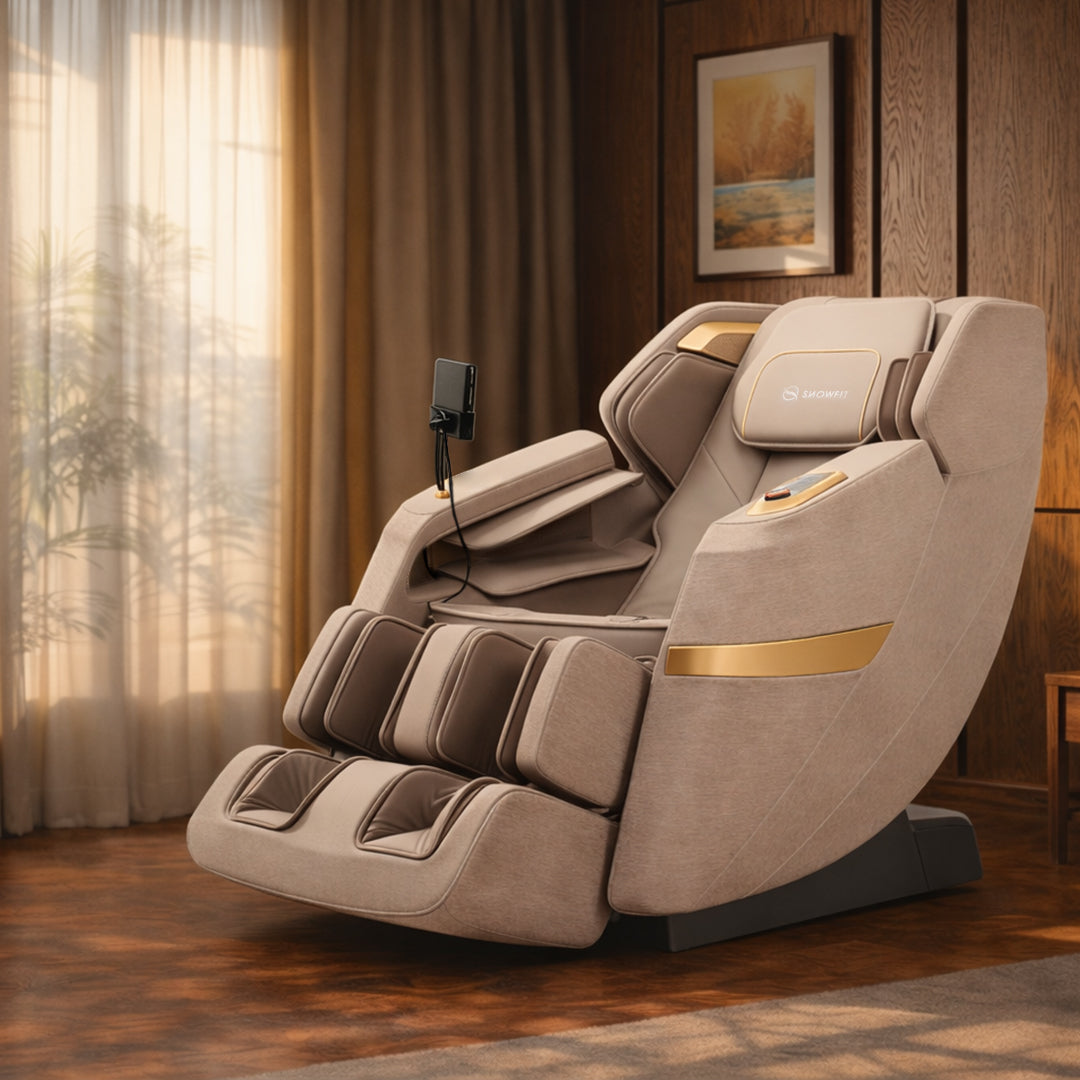
Another convenient option is to explore a massage chair in Malaysia with adjustable massage intensity and upper-body programmes.
Begin with a comfortable setting and discontinue use if the massage causes pain, numbness, dizziness or worsening discomfort.
9. Build a Consistent Relaxation Routine
Shoulder tension may return when relaxation is treated only as an occasional activity. A more useful approach is to create a routine that fits naturally into your day.
For example, combine a short walk, gentle stretching and a few minutes of relaxation after work. Home wellness equipment can also be incorporated into a regular routine instead of being used only after discomfort becomes noticeable.
Learn more about how massage chairs fit modern Malaysian homes and different living spaces.
10. Review Your Daily Habits
Pay attention to the activities that happen before your shoulders begin to feel tight. You may notice that discomfort develops after working on a laptop, scrolling on your phone, driving or carrying a bag.
Small adjustments may include raising your screen, changing the side used to carry a bag, supporting your arms, taking more breaks or reducing unnecessary shoulder lifting.
Can a Massage Chair Help With Shoulder Tension?
A massage chair may provide a convenient way to relax after work or everyday activities. Depending on the model, it may offer adjustable intensity, body scanning, heat functions and programmes designed for the neck, shoulders or upper body.
However, a massage chair should not be treated as a diagnosis or replacement for medical care. Its suitability depends on the user, the cause of the discomfort and any existing health conditions.
Features such as adjustable intensity and accurate shoulder detection can be especially important for older users. Read this guide on choosing suitable massage-chair features for senior citizens before comparing different options.
How Can You Prevent Shoulder Tension From Returning?
Prevention usually involves improving several small habits rather than relying on one solution.
- Change your sitting position regularly
- Keep your screen close to eye level
- Avoid holding your phone between your head and shoulder
- Take short walking or stretching breaks
- Use both backpack straps when carrying a backpack
- Keep frequently used items within easy reach
- Relax your jaw, hands and shoulders during stressful periods
- Choose a pillow and sleeping position that feel supportive
- Maintain regular, comfortable physical activity
When Should You See a Healthcare Professional?
Home relaxation methods may be appropriate for mild, temporary tightness, but some symptoms require professional assessment.
Seek medical advice when shoulder discomfort:
- Is severe or continues to worsen
- Started after a fall, collision or other injury
- Limits normal movement or daily activities
- Is accompanied by weakness, numbness or tingling
- Causes visible swelling, redness or deformity
- Does not improve with rest and gentle care
- Is accompanied by chest discomfort, breathing difficulty or feeling unwell
A qualified healthcare professional can assess the cause and recommend an appropriate treatment or rehabilitation plan.
Frequently Asked Questions About Shoulder Tension
Why do my shoulders feel tight after working?
Working for long periods may involve limited movement, forward-reaching arms, screen use and unconscious muscle tightening. Adjusting your workstation and taking regular movement breaks may help.
Can stress cause shoulder tightness?
Stress may cause some people to tense their jaw, neck and shoulders without realising it. Slow breathing, movement and relaxation breaks may help reduce this habit.
Should I stretch tight shoulders every day?
Gentle, comfortable movement may be included in a daily routine. Avoid forcing a stretch or continuing any movement that causes sharp pain, numbness or worsening symptoms.
Is heat or cold better for shoulder tension?
Comfortable warmth is often used for general muscle tightness. Cold may be more appropriate for some recent injuries or swelling. Because the correct option depends on the cause, seek professional advice when you are uncertain.
How long does shoulder tension take to improve?
The recovery time varies depending on the cause, daily habits and severity. Temporary stiffness may improve after movement and rest, while persistent or recurring discomfort should be assessed by a healthcare professional.
Make Shoulder Relaxation Part of Your Home Wellness Routine
Shoulder tension is often connected to everyday habits such as prolonged sitting, screen use, stress and limited movement. Gentle stretching, posture adjustments, comfortable warmth and regular relaxation may help the area feel less stiff.
For home wellness solutions designed around relaxation and everyday comfort, explore SnowFit Malaysia .
More massage, sleep and wellness guides are available at https://www.snowfit.my/blogs/news
```