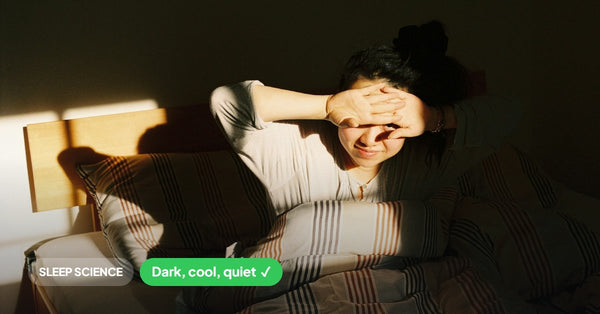
Best Sleeping Position: What Research Says About Back, Side and Stomach Sleeping

Quick Answer: There is no single "best" sleeping position for everyone. Research and clinical guidance lean towards side or back sleeping for most adults, with side sleeping the usual pick for snoring, sleep apnoea and late pregnancy, the left side often suggested for night-time reflux, and back or side (not stomach) sleeping for neck pain. The evidence is real but often based on small studies, so comfort and your own symptoms still matter most.
Few of us ever chose a sleeping position, yet the way you lie for seven or eight hours can affect how your neck feels after a long day at the laptop, whether your partner complains about snoring, and how bad heartburn gets after a late supper. Here is what the research shows, and where the evidence is still thin.
Side, back or stomach: what is "normal"?
Side sleeping is by far the most common position. The Sleep Foundation, summarising sleep-lab research, notes that more than 60% of adults sleep mainly on their side, while stomach sleeping takes up only a small share of the night for most people. It also notes that spinal flexibility tends to drop with age, which may be one reason older adults often find side sleeping more comfortable.
Cleveland Clinic's sleep specialists make a useful point up front: the ideal position depends on the person. If you wake up rested and pain-free, there is usually no need to retrain yourself unless a doctor has a specific reason.
Spinal alignment and back pain
The idea behind most advice is simple: keep the spine in a fairly neutral line. Side and back sleeping make that easier; stomach sleeping tends to arch the lower back and forces the head to turn sharply to one side, especially on a soft mattress.
How strong is the evidence? A 2019 scoping review in BMJ Open (Cary and colleagues) found only four relevant studies on sleep posture and waking spinal symptoms. Side lying, particularly well-supported side lying, was generally linked to fewer symptoms, results for back sleeping were mixed, and stomach and upright postures were linked to more symptoms in individual studies. However, the authors stressed that samples were small, posture was mostly self-reported, and there were too few high-quality studies for firm conclusions.
In practice, clinicians often suggest a pillow between the knees for side sleepers with lower back pain, and a pillow under the knees for back sleepers. These are low-risk tweaks, not proven treatments.
Neck pain: why stomach sleeping gets the blame
Harvard Health's advice for neck pain starts with position: stomach sleeping keeps the head twisted for hours, while back or side sleeping places less strain on the neck. Pillow choice matters too. Very thick or stiff pillows can hold the neck at an awkward angle; a softer, flatter pillow, or one that moulds to the head and neck, is usually preferred. For side sleepers, the Sleep Foundation suggests a pillow tall enough to fill the gap between neck and shoulder; back sleepers generally need a lower one. For Malaysians who spend long hours hunched over desks and phones, a mismatched pillow is a common and easily fixed problem.
Snoring and obstructive sleep apnoea: the case for side sleeping
This is where position has some of its clearest effects. When you lie flat on your back, gravity lets the tongue and soft tissues fall backwards and narrow the airway. Cleveland Clinic and the Sleep Foundation both suggest side sleeping for snorers, and the Sleep Foundation notes that some studies estimate roughly half of people with obstructive sleep apnoea have a "positional" form, meaning their breathing is clearly worse on their back.
Raising the head end of the bed may also help some people. In a 2017 study in Sleep and Breathing, 52 adults with mostly mild to moderate sleep apnoea slept one night flat and one night with the head of the bed raised by about 7.5 degrees. Their median breathing-interruption index fell by roughly a third, without disrupting sleep structure. It was a small, non-randomised study, the effect was weaker for full apnoeas, and the bed was tilted as a whole rather than bent at the waist, so it is promising rather than definitive. Importantly, position changes do not replace a sleep study or CPAP for people with diagnosed sleep apnoea.
Acid reflux: left side is usually better than right
If you get heartburn at night, the side you sleep on may matter. A 2023 systematic review and meta-analysis in the World Journal of Clinical Cases pooled three studies (10, 57 and 100 patients). Lying on the left side was linked to less time with acid in the oesophagus and faster acid clearance than lying on the right side or on the back. In the small randomised trial, a device that nudged people onto their left side increased left-side sleep and improved night-time reflux symptoms over two weeks. Overnight pH-monitoring research from the University of Amsterdam points the same way.
The likely reason is anatomy: on the left side, acid has a harder time flowing up into the oesophagus. Still, this rests on a handful of small studies. Raising the upper body is also widely recommended for reflux, but that review did not test it directly.
Pregnancy: side sleeping from the third trimester
The strongest data in this area come from an individual participant data meta-analysis published in EClinicalMedicine in 2019, which pooled five case-control studies (851 late stillbirths and 2,257 controls). Going to sleep on the back from 28 weeks of pregnancy was linked to about 2.6 times the odds of late stillbirth compared with going to sleep on the left side. Right-side and left-side sleeping carried similar risk, so the authors concluded either side appears equally safe.
Two caveats matter. First, these were case-control studies relying on mothers' recall, so they show an association, not proof of cause. Second, the research is about the position you fall asleep in. Pregnancy organisations such as the Star Legacy Foundation advise that if you wake up on your back, simply turn onto your side and go back to sleep, without panicking.
How mattress, pillow and an adjustable base interact with position
- Mattress: Spine-health notes that a medium-firm mattress suits most people, citing a 2003 Lancet trial of 313 people with chronic low back pain in which medium-firm mattresses beat firm ones for pain and disability. Side sleepers need enough give at the shoulder and hip; stomach sleepers usually do better on a firmer surface that stops the hips sinking.
- Pillow: Match the height to your position: fuller for side sleepers, lower for back sleepers, very thin or none for stomach sleepers.
- Adjustable base: Raising the head section is a convenient way to get the upper-body elevation often suggested for snoring, congestion and reflux, and to switch between positions without stacking pillows. Remember that the published apnoea data used a gentle whole-bed tilt, and that comfort varies.
What real users say
These are anecdotes, not evidence, but patterns recur. On CPAP forums, many people with sleep apnoea describe needing noticeably higher machine pressure, or having more breathing events, when they roll onto their backs, and several say avoiding back sleep made a clear difference. Tricks such as a tennis ball sewn into a T-shirt, a small backpack, or a pillow wedged behind the back are popular, but users report they take weeks to get used to and can disturb sleep at first. Others, especially those with arthritis, say side sleeping simply hurts their hips and shoulders, so back sleeping is their only comfortable option.
Pregnant women on parenting forums often describe anxiety about waking on their backs after reading stillbirth headlines, and complain that staying on one side all night brings sore hips, heartburn and numb arms. Pillows behind the back and between the knees are the most common workaround.
Who should be careful / talk to a doctor first
- Anyone with loud snoring plus gasping, choking or daytime sleepiness: get checked for sleep apnoea instead of relying on position alone.
- Pregnant women with questions about position, pelvic girdle pain or breathlessness: speak to your doctor or midwife.
- People with frequent night-time heartburn, trouble swallowing or unexplained weight loss.
- People with shoulder or hip injuries or arthritis.
- People with circulation problems or leg swelling, before raising the bed for long periods.
The bottom line
For most adults, side or back sleeping is the safer default, with side sleeping favoured for snoring, sleep apnoea and late pregnancy, the left side often helpful for night-time reflux, and stomach sleeping the most likely to strain the neck. Much of the research is small, so treat these as sensible starting points and let comfort guide the details. Good mattress support, the right pillow height and, for some, a raised head section can make a healthy position easier to keep.
If you would like to feel how different support levels and adjustable positions suit the way you sleep, you can browse our smart mattresses and beds or try them in person at a SnowFit showroom near you.
References
- Cronin RS et al. An individual participant data meta-analysis of maternal going-to-sleep position, interactions with fetal vulnerability, and the risk of late stillbirth. EClinicalMedicine, 2019
- Simadibrata DM et al. Left lateral decubitus sleeping position and gastroesophageal reflux: systematic review and meta-analysis. World Journal of Clinical Cases, 2023
- Schuitenmaker JM. Left is right: the effect of sleep position on nocturnal gastroesophageal reflux. University of Amsterdam (PhD thesis)
- Cary D, Briffa K, McKenna L. Identifying relationships between sleep posture and non-specific spinal symptoms in adults: a scoping review. BMJ Open, 2019
- Souza FJFB et al. The influence of head-of-bed elevation in patients with obstructive sleep apnea. Sleep and Breathing, 2017
- Sleep Foundation. Best Sleeping Positions
- Cleveland Clinic. What Is the Best Sleeping Position?
- Harvard Health Publishing. Can changing my sleep habits help with neck pain?
- Spine-health. Selecting the Best Mattress
- Star Legacy Foundation. FAQ: Safe Sleep in Pregnancy
- CPAPtalk forum. Back sleeping vs. side sleeping (user discussion)
- CPAP.co.uk forum. Positional sleep apnea (user discussion)
- Mumsnet. That news story about stillbirth and sleeping on your back (user discussion)
This article is for general information and is not medical advice.